You have a browser full of tabs and they all look the same. Similar photographs of students laughing at laptops, similar promises about flexibility, similar assurances that the credit is fully accredited. Some of them are asking for several hundred dollars before you have spoken to a human being.
The instinct that brought you here is a good one. Design tells you nothing about whether a credit will be accepted, and the cost of finding out too late is not the money — it is a teenager in the spring of Grade 12 discovering that a course they completed does not do what everyone assumed it would do.
So this is a checklist rather than an accusation. I am not going to name any school, favourably or otherwise. I am going to tell you what to ask and how to check the answers yourself.
Why this question is worth asking
A high school credit is unusual as a purchase, because its value is entirely determined by third parties. You are not buying a course. You are buying a course’s future acceptance by a university admissions office, a college, a home school that will fold it into a transcript, or a professional programme with a prerequisite list.
If any of those parties declines to recognise it, you have not received poor value — you have received nothing at all, and typically you find out at the worst possible moment. That is why this question deserves an hour of your evening now rather than a phone call in May.
Being cautious about this does not make you a suspicious parent. It makes you a parent who understands what is actually being sold.
What actually makes a credit valid
The authority to grant Ontario secondary school credits does not come from a website, a logo, or the word “accredited” in a footer. It comes from the school’s standing with the Ministry of Education. A private secondary school that grants credits towards an Ontario diploma operates under Ministry oversight, including inspection of the courses it delivers. That standing is the thing you are checking. Everything else on the site is marketing.
Here is how to check it rather than take anyone’s word for it.
Ask the school directly — by email, so you have it in writing — whether it is inspected by the Ministry of Education and authorised to grant credits towards the Ontario Secondary School Diploma. Ask them to send you the identifying details the Ministry holds for them, and the name under which they are registered, which is not always the name on the sign. Then verify those details independently: contact the Ministry of Education through the contact routes published on ontario.ca and ask how to confirm a private school’s inspection status, or ask the guidance office at your child’s home school, which does this routinely and has no reason to mislead you.
You will notice that this article does not print any school’s Ministry identification number — including ours. That is deliberate, and it is the point of the section. A number typed onto a webpage proves nothing, because anyone can type a number onto a webpage. What proves something is you requesting it directly and then confirming it with the body that issued it. A school that gives you those details willingly and expects you to check them is behaving exactly as it should.
If a school is evasive about this specific question, you have your answer without needing to know anything else.
Questions worth asking any credit school before you pay
Ask these of us and of everyone else you are considering. The answers are more revealing than any brochure.
- Who teaches the course, and are they certified to teach in Ontario? A named, qualified teacher responsible for the course is the baseline.
- How much live contact does my child actually get each week? “Support available” is not the same as scheduled teaching. Ask for hours.
- How large is the class?
- How are tests and final assessments supervised? This is the question that separates serious providers from the rest. Ask specifically who is in the room, or watching the screen, while a student is being assessed.
- How is the final mark determined? Ask what proportion rests on supervised work versus work completed unsupervised at home.
- What is the timeline, and what happens if my child falls behind? Ask whether anyone will notice and contact you, and how quickly.
- How is the credit reported and to whom? Ask how the report card reaches your child’s home school and how the credit appears on the official transcript.
- Can I come and see it?
You can read more answers about how classes run on our FAQ page, and if a school’s answers to the list above are vague, repeat the question. Vagueness under a direct question is itself information.
What small in-person classes give you that self-paced modules don’t
I want to be fair here, because plenty of good learning happens remotely and I am not interested in pretending otherwise.
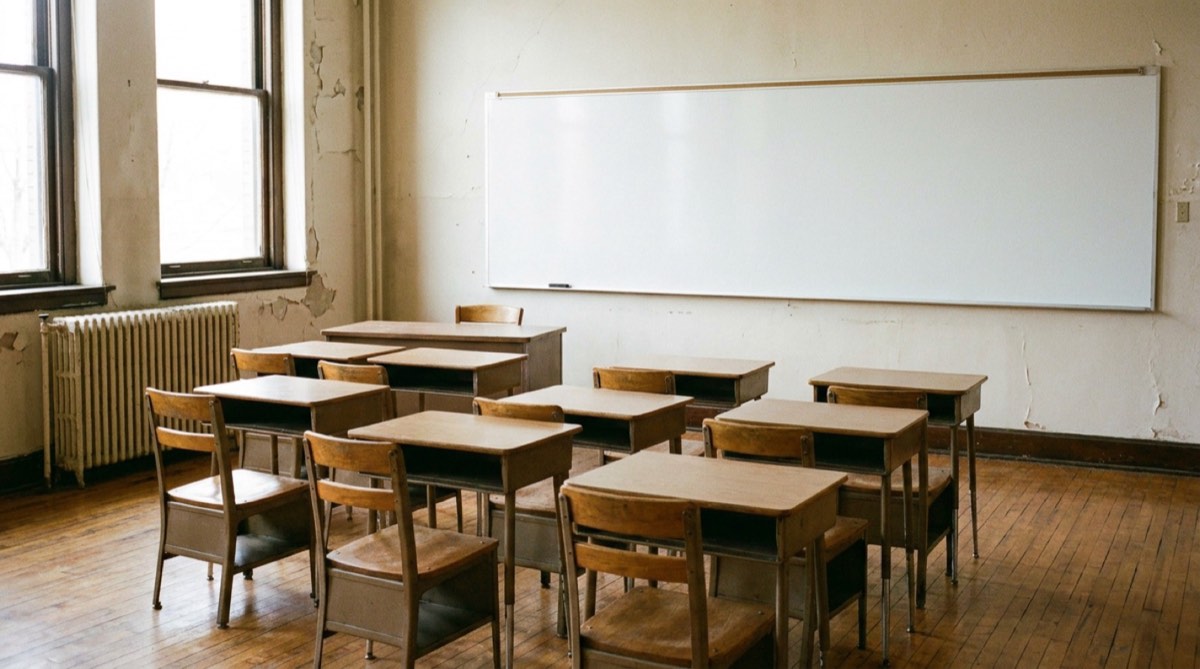
What a small in-person class gives you is a person who notices. A teacher standing in front of eight students knows within a week which one has stopped following, and can stop and fix it that day. Pacing is enforced by the simple fact of turning up. Questions get asked out loud, because a student who would never type a question into a forum will ask the person beside them.
Self-paced study asks a teenager to supply all of that themselves — the structure, the pace, the honesty about what they do not yet understand. Some students genuinely can, and they do very well. Many cannot, particularly in a course they are repeating, and particularly in a subject that already worries them. You know which sort of student you have.
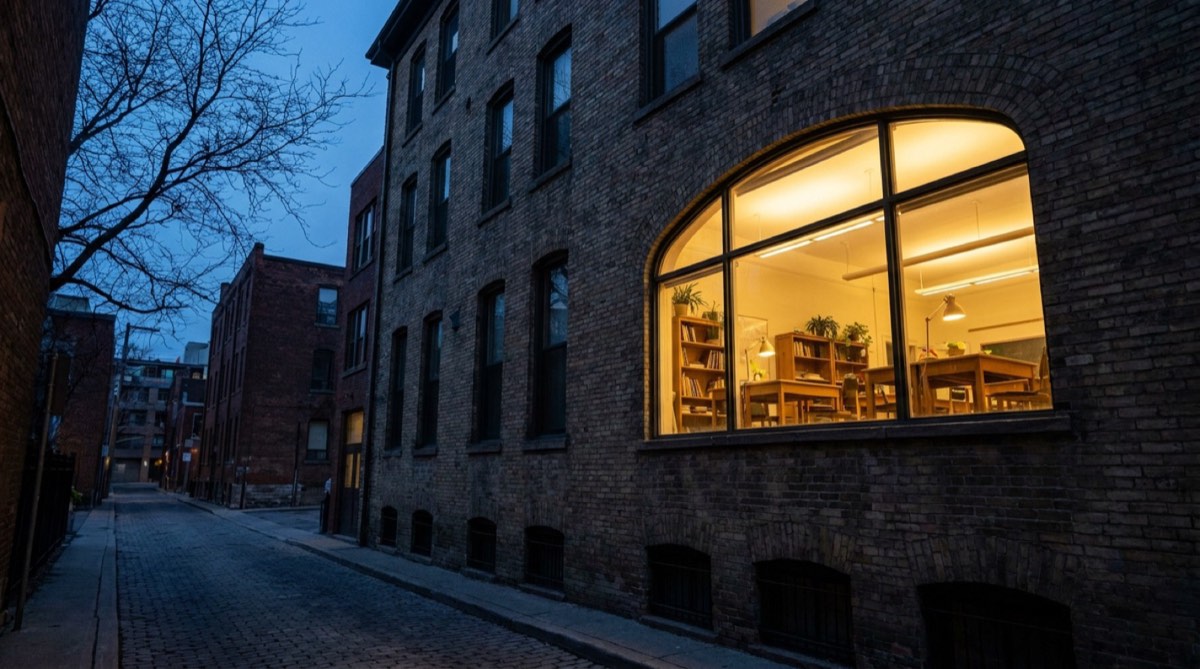
Everything we teach at IQRA Academy is taught in a room, in small classes, at 2704 Danforth Avenue. You can see the full course list we teach in person if you want to know what that covers.
Where online learning legitimately fits
Online delivery is a normal part of secondary education in Ontario now, and there are requirements in provincial policy about online learning that apply to students working towards a diploma. Those requirements have been adjusted more than once in recent years, so do not rely on this article or on any school’s summary of them.
Instead, ask your child’s home school guidance office two questions: what the current online learning requirement is for a student in your child’s year, and whether the specific course you are considering satisfies it. Guidance offices track this. Ten minutes of their time is worth more than an evening of reading forum posts.
The broader point is that “online” is not the dividing line. Legitimate schools deliver online, and questionable providers deliver online. The dividing line is oversight, teaching and supervised assessment — which is why the checklist above asks about those things and not about the delivery format.
Confirming a course will actually be accepted
Do this before you pay, not after.
If the credit is for university or college admission, contact the admissions office of the institutions your child is applying to. Ask how they treat a course completed at a private school, whether they treat a repeated course differently, and whether they require anything additional. Put the question in writing and keep the reply.
If the credit is going back onto a transcript at a day school, speak to that school’s guidance office before enrolment, not after. They will tell you what they need in order to record it and whether there is anything about the timing that will cause a problem.
This is fifteen minutes of phone calls, and it turns an assumption into a fact. Every family who has been caught out skipped exactly this step. You can see how assessment and enrolment work here at the same time.
Seeing a school before you commit
There is one advantage a physical school has that no amount of web design substitutes for: you can walk into it.
We have been at 2704 Danforth Avenue since 2010, and our principal, Khalid M. Qureshi, will speak with you. The school is open Monday to Saturday from 10:00am to 10:00pm and Sunday from 10:00am to 6:30pm, so a visit can happen after work. Call +1 (416) 949-6064, email [email protected], or simply visit our Danforth Avenue location and look at the classrooms your child would sit in.
Ask us the same questions you would ask anyone, including the ones about Ministry standing and supervised assessment. Check the answers. Then apply once you’re comfortable — and not a moment before.